


The Villa
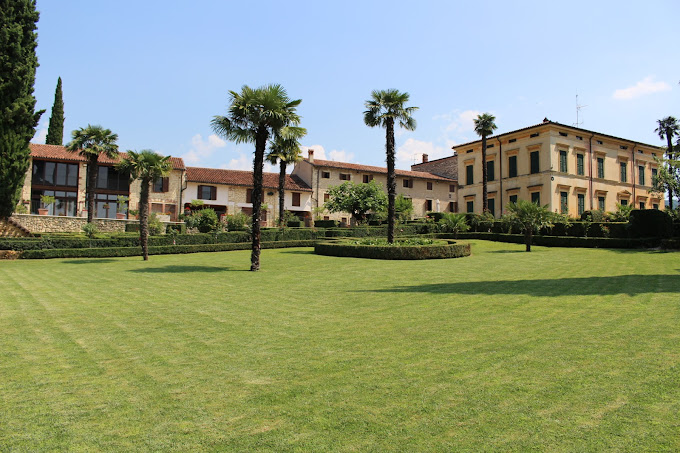
The manor house, built in a panoramic position over the Valpolicella vineyards, represents an example of 19th-century architecture, linked only in part to the ancient building tradition of Villa Veneta.
It is characterized by elegant compositional lines, focused on the symmetry and elegant sobriety of the tuff decorations and by the openings, ordered in different shapes and sizes, so as to be able to fully enjoy the rural atmosphere and climate.
Interesting decorative elements, drawn from a classical language, frame doors and windows, alternating smooth friezes and triangular pediments.
In the eighteenth century, the manor houses were transformed mostly into holiday homes, becoming a place of pleasure. The volume therefore becomes compact, to clearly distinguish the manor rooms from the adjacent cottages, which instead require a direct exchange between inside and outside.
The Italian garden
The villa is framed by an elegant garden, developed at the beginning of the 20th century, in which different landscape elements linked to the tradition of “living in the villa” coexist harmoniously: the classic Italian style, the romantic hints of the English garden and the local characterization.
Hedges of boxwood, the favorite shrub in all Italian gardens, are declined in harmonious geometric designs, thus creating regular paths, which accompany the visitor towards perspective views that bring together the entire property in a single glance.
The walkways are flanked by citrus trees, thus resuming the custom of associating local plants and essences with typical Mediterranean blooms. This was, in fact, a feature linked to the landscape tradition in the Verona area, where, thanks to the mild climate guaranteed by the proximity to Lake Garda, it was possible to create “cedar” even in the hilly areas.
The addition of a small belvedere on the edge of the garden made it possible to enjoy a broad panorama.
The rural buildings
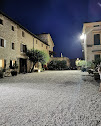
The rural buildings are connected in an L-shaped plan and show two peculiarities of the ancient minor architecture of Valpolicella: on the one hand the “closing towards the outside”, necessary to guarantee defense and security, on the other the creation of a circumscribed space , the courtyard, which housed both some jobs related to the cycle of the countryside and moments of celebration and aggregation of the families who lived there.
The recent renovation has enhanced the original historical-architectural characteristics: the buildings retain their charm intact and are witnesses of the past. Currently used for drying, vinification, aging in wood, the tasting room , the wine shop and the agritourism.
 Own or work here?
Claim Now!
Claim Now!
Own or work here?
Claim Now!
Claim Now!
Contact with business owner
 Your request has been submitted successfully.
